
18
November
From Dimensions of Time and Silence to Symphony No. 2 “Christmas”
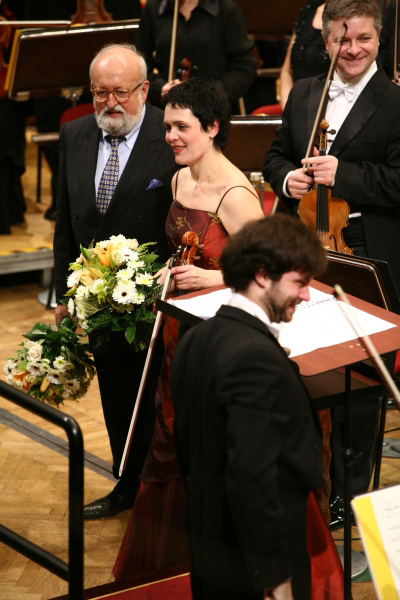
Four great conductors, soloists and the Warsaw Philharmonic Symphony Orchestra with masterpieces of the 20th century in the program. This is how presents itself the third day of The Krzysztof Penderecki Festival, organized in Warsaw on the occasion of the jubilee, 80th birthday of the composer.
Year 1959 was a breakthrough year for Krzysztof Penderecki. In that year he won three main prizes (1st, 2nd and 3rd) at the competition for young composers held by the Polish Composers' Association, for his Strophes, Emanations and Psalms of David. At the end of 1959 and 1960 Penderecki created also Dimensions of Time and Silence which confirmed him as a member of the world avant-garde. An avant-garde which he himself now treats and evaluates with detachment. “Because in innovation, which is brought down to experiments and formal speculation, there is more destruction than creating something new” –the composer emphasizes.
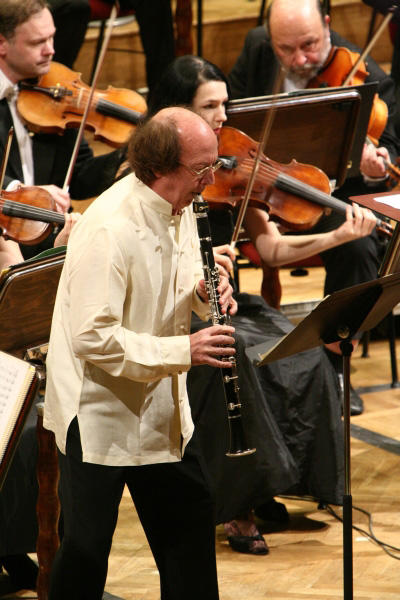
Yet, the power of his avant-garde pieces is still great and we will be able hear this for ourselves many times during this festival. Also this time, when on the stage of the Warsaw Philharmonic Dimensions of Time and Silence will be performed by the philharmonic orchestra under the baton of Jerzy Maksymiuk. In the program of the evening we will hear also Double Concerto for Violin, Viola and Orchestra composed last year.
I wrote it in 2012 for the 200th jubilee of the Viennese Music Association Musikverein and that is where the premiere took place. Since then the work has been performed around 50 times and permanently entered the program of many philharmonics,” says the composer, and discloses by the way, “Violin was my first instrument, then also viola. I also have many friends who play those instruments and it was them who asked me for such a composition.”
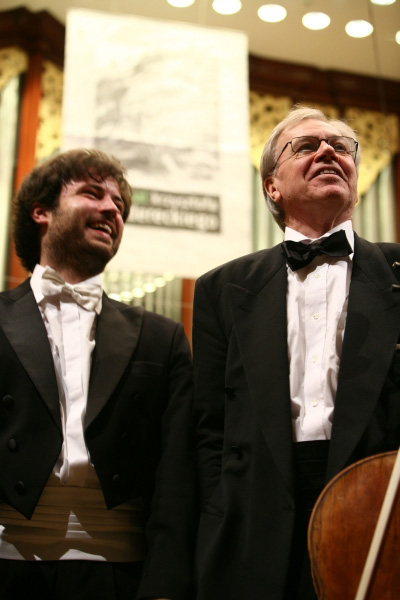
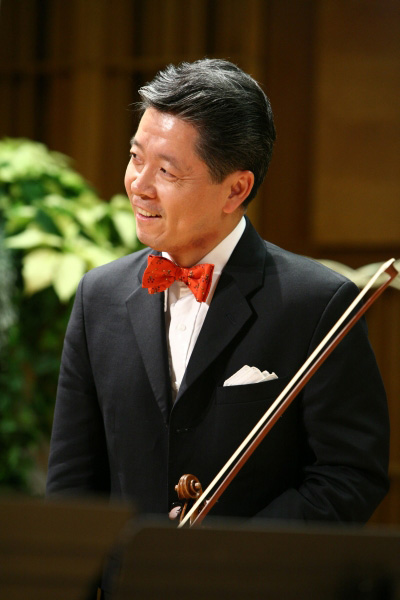
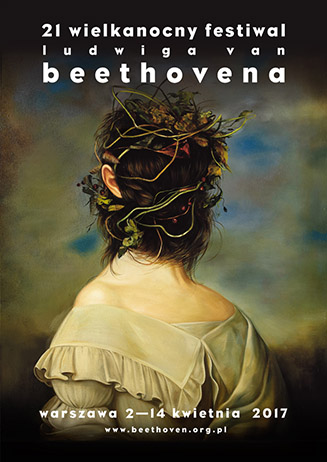
Double Concerto… was dadicated to the excellent Lithuanian violinist and violist Julian Rachlin, who performed the composition for the first time with the Japanese violinist Fumiaki Miura. During the jubilee festival it will be the same two artist who will perform this work again. Behind the conductor’s stand we will see the young Venezuelan – Rafael Payare, whom we remember perfectly from last spring’s Ludwig van Beethoven Easter Festival. “Penderecki wrote his Symphony No. 2 in the years 1979-1980, completing the commission of Zubin Mehta and the New York Philharmonic. As the author recalls – a turning point in the work on the composition was Christmas 1979 when a vision of the entire work appeared in his mind.
The general atmosphere of the Symphony – dark, serious, dramatic – is difficult to associate with the traditional characteristics of Polish Christmas – its warmth, religion, family atmosphere. In this tenebrous, somber mood the only ray of light is brought by the typical artistic gesture of the composer: an allusive quotation from Silent Night, Holy Night interwoven in the narration of the work – like a symbol of hope that is always fresh… The motif of the carol appears a couple of times throughout the musical form, but we would be waiting in vain for an easy apotheosis of this gesture in the very finale of the work. Such, Penderecki did not plan – his Symphony is covered by darkness of a dramatic F-sharp minor. Why?” asks the musicologist Stanisław Kosz. We might look for the answer to the question in the period in which Penderecki was writing this work.
At the master’s jubilee festiwal the performance of Symphony No. 2 “Christmas” will be led by Marek Janowski who will conduct the Warsaw Philharmonic Symphony Orchestra. The evening will be completed by another unusual work of Penderecki - Three Chinese Songs for Baritone and Chamber Orchestra. They will be performed by the excellent German baritone Thomas Bauer, while the orchestra will be led by one of the most highly regarded Chinese conductors Long Yu. The concert will take place on Tuesday (19th November) at the Warsaw Philharmonic at 7 p.m.