
22
November
Grand finale at the National Opera
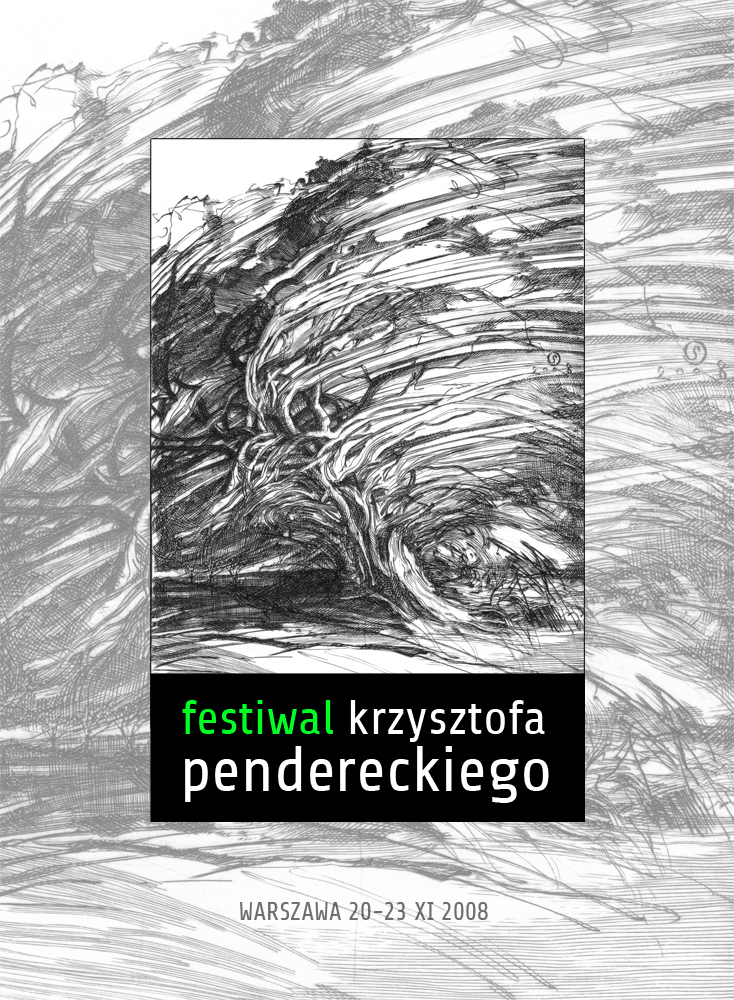
It will not only be a great gala, but most of all a meeting with Penderecki’s most wonderful music: from Threnody to the Victims of Hiroshima to Credo. Before us, the final concert of the jubilee, Krzysztof Penderecki Festival.
For a start Threnody to the Victims of Hiroshima. Another work written in the period of fascination with avant-garde. And another that raised outrage and objections. “This young composer, for unclear reasons, uses instruments in a way which is not intended for them,” wrote Zygmunt Mycielski. “Today it sounds funny – is it not the purpose of instruments to produce sound? So one should rather say: in a way which is not customary, because here lies the real reason for outrage. Until today, early works of Penderecki – with Threnody at the top – are an emblem of chaos and pointless shocking for those, who expect from violin or cello a beautiful song, that soothes the senses without disturbing sleep,” writes Adam Suprynowicz (Dwutygodnik.com). And stresses, “Threnody is a clear music, sometimes strongly marked with expression, in the common intuition of many performers and listeners – deeply dramatic. Although it came into being in various, also pop-cultural contexts, despite the declarative title – it does not slip into banality. This is a feature of a masterpiece.”
Penderecki himself rarely replied to the accusations leveled against him by the critics. Anyway, he gave up the style of avant-garde many years ago. Today he reminds only about the source of the title of Threnody, “First I wrote the composition, then I added the dedication. It wasn’t like I wrote the piece having in mind bursts and explosions, which some critics seek in my work. It was the first of my largest compositions. Earlier I composed mostly chamber music, so for me it was an overwhelming experience,” says the composer.
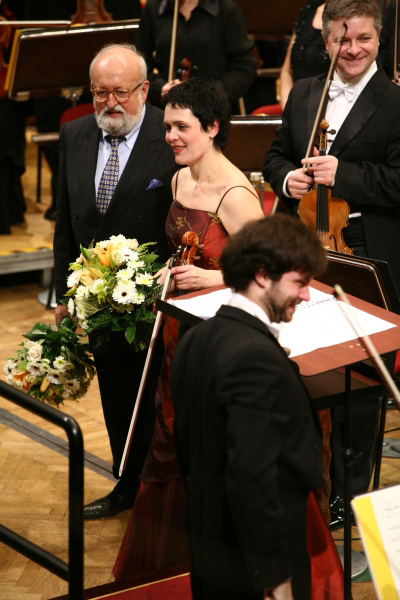
We will hear Threnody to the Victims of Hiroshima during the final concert of The Krzysztof Penderecki Festival (Saturday, 23rd November, 7 p.m.). On the stage of Teatr Wielki – Polish National Opera we will see Sinfonia Varsovia under the baton of Krzysztof Urbański.
During the same evening we will hear one more, especially important work in Penderecki’s composing opus – finished in 1998 and called his personal profession of faith, Credo. When writing it, Penderecki already had in his oeuvre a large number of church music, including the famous Passion, Polish Requiem and Seven Gates of Jerusalem. There was a plan for a mass, on which the composer started working in 1996, beginning with the Credo. This fragment of the cycle quickly grew to the size and weight of an independent piece. A piece exceptionally – even for Penderecki – eclectic, surprisingly simple and straightforward, and above all, personal. During the jubilee gala Credo will be performed by Sinfonia Varsovia led by the Russian master of conducting Valery Gergiev. In the solo parts will shine: Iwona Hossa – soprano, Ewa Vesin – soprano, Agnieszka Rehlis – mezzo-soprano, Rafał Bartmiński – tenor, Nikolay Didenko – bass and the Warsaw Philharmonic Choir, Choir of the Teatr Wielki – National Opera and Warsaw Boys Choir.
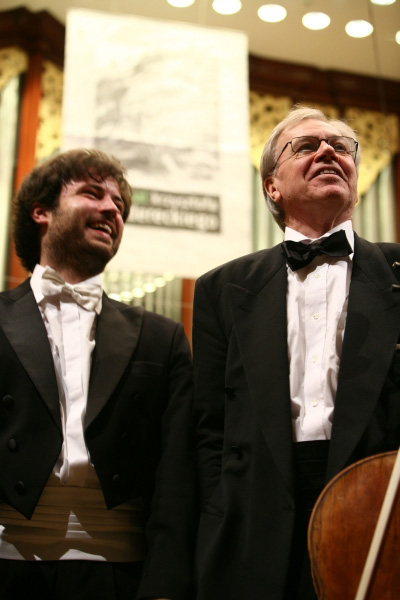
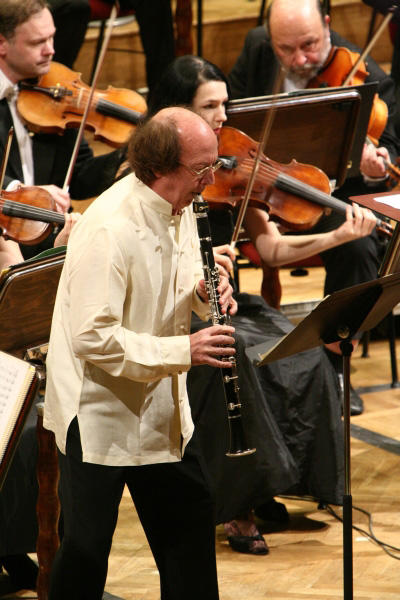
The program of the final gala will be completed by masterly performances of Krzysztof Penderecki’s chamber works: Duo Concertante for violin and double-bass and Concerto Grosso for three cellos and orchestra. Masterly, because the works will be performed by world-renowned stars of classical music. In the first one we will hear the violinist Anne-Sophie Mutter and double-bassist Roman Patkoló, in the second three brilliant cellists: Arto Noras, Ivan Monighetti and Daniel Müller-Schott. The ensemble will be conducted by Charles Dutoit.