
30
March
The Passion, the first step in world music
“I went to Münster Cathedral. And sat down in a pew, and there was a huge sculpture standing next to me. So I look up, and see St Christopher. Then I thought – well, now I’ll certainly compose that Passion”, Krzysztof Penderecki reminisces in an interview by Tomasz Handzlik.
Tomasz Handzlik: First Jonny Greenwood and Aphex Twin with their surprising interpretations of Polymorphia and references to Threnody, and now Grzegorz Jarzyna with St Luke Passion. Are you not afraid to entrust your works to other artists?
Krzysztof Penderecki: The Passion has been around for quite a while. It has been performed in various circumstances, with various ensembles. And it has always held its own. Obviously, there were poor stagings, for example the 1979 one at the Wielki Theatre – National Opera in Warsaw, with direction and stage design by Andrzej Kreütz-Majewski. All I remember from the production were the beautiful sets, because everything else was horrible. I came to the dress rehearsal, and left promptly. I was not at the premiere, either.
What if they are artists from quite a different field of art, like Greenwood and Aphex Twin?
I have not discussed the staging with Krzysztof Jarzyna. It is a difficult piece to put on stage, an enclosed form that rejects all the attempts at withholding or changing the course of action. Therefore, the director must conform to the music, to the form. And what will Jarzyna do with it? He didn’t want to say that, and I gave him a free rein. He is a highly intelligent man, with plenty of fantastic ideas. He is controversial, yet in this case, there is little he can do. Still, some ten years ago I might have been concerned. But now, what am I risking? The Passion already holds its place in history.
The meeting with Greenwood and Aphex Twin was a similar case. I was initially afraid, yet later it turned out that they are very good musicians, especially Greenwood, who is an appealing composer as well. Moreover, that was a clash of two worlds, of different generations. After all, I wrote that music early in the 1960s. So this was certainly an additional dusting off the cobwebs and refreshment for myself.
I notice there is growing interest in your works.
Musical preferences come full circle. Just like clothing fashions that return after 30 years. In this case, the distance is only longer, as my music returns after 50 years.
The music you wanted to escape from?
I keep on escaping all the time, because I believe that one cannot repeat oneself. Which is why my music changes like in a kaleidoscope. After a period of sonorism and avant-garde, I began seeking a new field for manoeuvres, also because composers were copying my music, the scoring technique I developed, and the style. And I was right, because today – looking from the perspective of the many years that have passed – I believe that one simply could go no further. So I close the door behind me.
And you constructed a work that is much easier in reception.
Yet it is also an entirely different genre, a different dimension. There are, obviously, sonorist elements in the Passion, and far more developed ones at that. Besides them, there are elements that I had not used earlier. For example, the choir that I treat much like in the Threnody. It was a daring piece at its time. I also tried to translate the experiences gained at the studio of “electroacoustic” music in Warsaw in 1957 into the canvas of the Passion. I found it one of the most important moments in my life. This was the case as at the Warsaw Polish Radio Experimental Studio I heard music that previously I had not even been capable of imagining. I tried to transpose it onto an orchestra later, and I began to invent new methods of making sounds, new ways of playing, and an appropriate scoring on top of that. The following milestone was the Passion.
You were the first composer among contemporary artists who made a reference to a historical genre.
I latched onto a subject that was actually a taboo. At the time, nobody was writing such large forms. Besides Messiaen, obviously, yet this is a separate chapter in the history of music. Because to compose the Passion after Bach is as if one tried to write the sequel to The Magic Mountain after Thomas Mann.
Nor did you hesitate to tackle a sacred subject.
The reason for writing the Passion was the millennium of the Baptism of Poland, which – besides the enclosed realm of the Church – was in fact neglected in silence in our country. And I was always someone who did everything to the contrary. First at home, and then as an adult. So I became interested in religious music, not because I was especially pious, but because it was forbidden. I was raised in a highly Catholic family, obviously. My friend from Dêbica and I were even calcants, that is the ones who pumped the bellows of the church organs.
Yet in those days, the Church was entirely different. Fighting and being fought. Which is why everyone supported it, even non-believers. And that must have been the only place at the time where one could hear the truth.
Were you never afraid of the powers that be?
I have always been the jester. I was thumbing my nose at them, doing what was forbidden. Moreover, I was young at the time, and then your head is clear, devoid of qualms, afraid of nothing, and challenging in whatever you do.
And the moment when you decided to write the Passion?
It was in 1962, during the Donaueschingen Festival, with the world premiere of Fluorescences. There was a scandal, with even the greatest lovers of the avant-garde protesting, as this is an iconoclastic piece, which utterly demolishes the orchestra and its traditional shape and sound. Reactions were very violent, and I was very much bothered, so I went for a walk after the concert, to get a breather. I was joined by the musical director of Cologne Radio, the eminent musicologist Otto Tomek. And he asked me if I wouldn’t fancy writing a piece for the 700th anniversary of Münster Cathedral. So I quipped that I would write the Passion. He laughed, couldn’t believe it, and wanted to dissuade me from the idea, suggesting a lesser form, yet I was stubborn.
The concept had been in my head earlier, yet I had no idea how to do it. As far as gathering the texts was not a problem at all, finding an appropriate form proved most difficult. Therefore, I started by drafting a musical structure, based on the B-A-C-H motif. I wrote a few such essays, and finally built the entire Passion on this succession. It was somewhat easier, as I had already completed Stabat Mater, a work written in parallel, in the same month as Fluorescences. There, I returned to the polyphonic technique of Renaissance, and that was actually my first attempt to face up to a larger form.
Then I went to Münster Cathedral. I remember it as if it were today, and there was somebody there tuning the organ. The cathedral is huge, yet as it is built from soft sandstone, the sound reverberates for 12 seconds. I was fascinated with the sound. I sat down in a pew to imbibe the atmosphere, and there was a huge sculpture standing next to me. So I look up, and see St Christopher. Then I thought – well, now I’ll certainly compose that Passion.
You once said that the Passion was about “nobody standing to the side”. That “everyone can be dragged in by that Passion crowd, the turba that demands that Christ be crucified, much like redemption applies to everyone”.
Passion is very dramatic. Should one compare it to my unparalleled model, it is not as meditative as St Matthew Passion. What I find more to my liking is the aura of St John Passion, where the turba soars markedly; they are highly dramatic moments. I have always been most overwhelmed by that.
The premiere in Münster was a great event. The thousands of eminent personalities from all over the world included the Papal Nuncio. Did Pope John Paul II ever hear the Passion live?
Yes, at one of the first performances in Kraków, yet at the time he was not yet the Pope.
Passion is dedicated to your wife, El¿bieta.
We married in 1965, when I was fervently finishing the composing of the Passion. As ever, I was late, and Dr Tomek was already threatening to call off the world premiere. And I was very keen on that, as that was to be my first concert that was so huge and on a world scale. And it is due to that urgency that no normal score has ever been written for the Passion. To provide the material for practising as promptly as possible, I first wrote the parts of the choir, and pasted them on huge sheets of paper. Then came the soloists, because they were also threatening that they would not sing unless I sent the material quickly. And they were major names: Stefania Woytowicz, Andrzej Hiolski, and Bernard £adysz. So I quickly wrote their versions too, leaving the space for the orchestra for myself to fill up later at the bottom of the pages. So there is only this pasted-together score, yet it is in the archives of Cologne Radio. They never wanted to give it back to me.
So the dedication was a wedding present, was it?
When I was going to Münster, my wife, of course, was refused a passport. And I returned only a month later, because after Germany, the work was also performed in France and Turin. It was then that I made the decision about the dedication. It must have been after the Kraków premiere. Later the Passion was again produced in Warsaw, where there was such a crowd that they tore the door of the Warsaw Philharmonic Hall from its hinges.
Was your wife moved by the dedication?
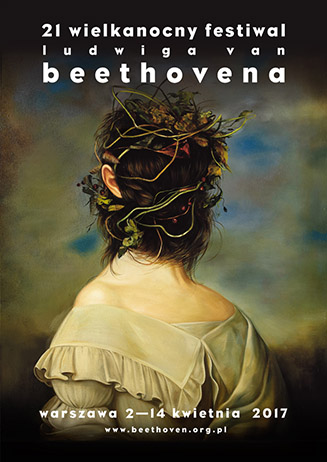
She is every time the Passion is performed. The more so as it is not very often played. The last time was a year ago during the Beethoven Festival in Warsaw. Still, that must have been its best performance, as it was none other than my wife who organised three grand choirs and a children’s choir on top of that. Three hundred people. And it finally sounded as it should.
You are still emotional about it, too.
The Passion? Yes, because it is a piece of mine that was connected to a certain period. My first steps in world music. And also in my private life… It was then that everything somehow clicked together.
If you were writing the Passion today, what would its message be?
I don’t know. I have already prepared texts for St John Passion. Among others, Dostoevsky and Bulgakov. So it would not be a humble Passion, but a rebellious one. And I would probably be cursed utterly. I have long tried to start working on it, but commissions for other pieces arrive all the time, and I keep on postponing this one. In a sense, this is also an anxiety that I would not cope with writing an equally good Passion. It is difficult to measure up to yourself 50 years later. But I may still succeed with finding the time.
BM