
Masters of world chamber music - 20 November 2013
De Natura Sonoris III, Largo for Cello and Orchestra, Symphony No. 8 “Lieder der Vergänglichkeit” (Songs of Transience) and phenomenally played String Quartets – behind us another “grand” day of The Krzysztof Penderecki Festival, marking the composer’s 80th birthday.
The evening began with a very strong accent: Flute Concerto with the solo part performed by brilliant Łukasz Długosz, led by the Spanish conductor Jesús López-Cobos, and one of Krzysztof Penderecki’s flagship compositions De Natura Sonoris III, the first versions of which Stanley Kubrick used years ago in his unforgettable horror movie “The Shining”. Personally, I enjoyed the most the performance of De Natura Sonoris. The Venezuelan conductor Rafael Payare, leading this evening the youngest Polish symphonic ensemble – The Polish Sinfonia Iuventus Orchestra – was like dynamite. The young ensemble instantly let itself get carried away by his emotional vision, painting before our eyes musical images full of terror, sending shivers down the spine with the magnitude of sound and expression intensified to the limits.
After these emotions, came a moment of relief. And probably in the most beautiful form. From the stage of Warsaw Philharmonic came the sounds of Penderecki’s Largo for Cello and Orchestra. Behind the conductor’s stand appeared Maximiano Valdés, while the solo part was personated by Claudio Bohórquez. Already the first sounds of the cello solo, and right after that the soloist playing in a duo with the cello concertmaster, gave a clear signal that we would be dealing with a musical absolute. Because Claudio Bohórquez is a great artist! His every sound, every phrase is a real piece of art. Also the orchestra led by Valdés sounded wonderfully, with sensitivity, either holding a dialogue or building a strong counterpoint to the poetic parts of the soloist.
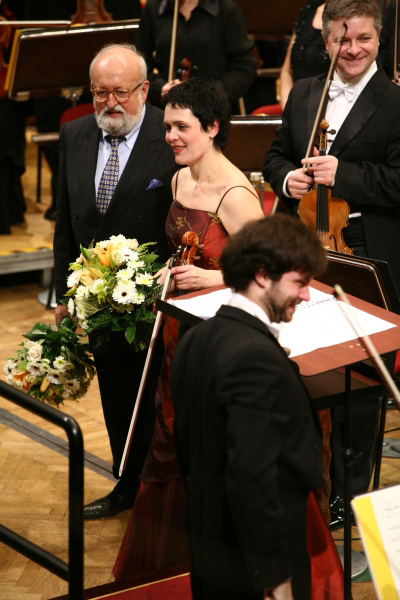
The evening ended with the performance of Symphony No. 8 “Lieder der Vergänglichkeit” (Songs of Transience). “Transience is a theme of the mature age, when a man does an examination of conscience, summing up what happened in his life (…) At the beginning I wanted to write a cycle of songs about trees. It turned out however, that something more than only music about trees is being born. That in this period of life the main theme for me is in fact transience. I think that at a certain age a man begins to have distance to everything: to things, to people, to literature and to music. I surely would not have written such a piece when I was 30 or 40,” Penderecki once admitted in an interview for “Rzeczpospolita”. Performing this work on Wednesday evening The Polish Sinfonia Iuventus Orchestra and Krakow Philharmonic Choir delighted with delicate lyric and subtlety of interpretation. Also the soloists made a great impression: Iwona Hossa – soprano, Agnieszka Rehlis – mezzo-soprano, Mariusz Godlewski – baritone. Under the baton of Łukasz Borowicz, Symphony “Songs of Transience” became an extraordinary, personal tale about life, and, maybe also about the dreams of the artist?
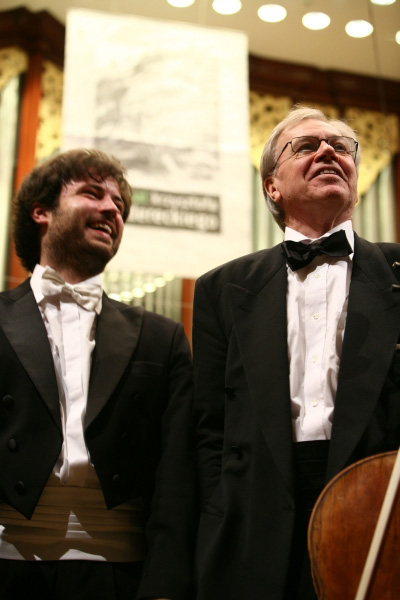
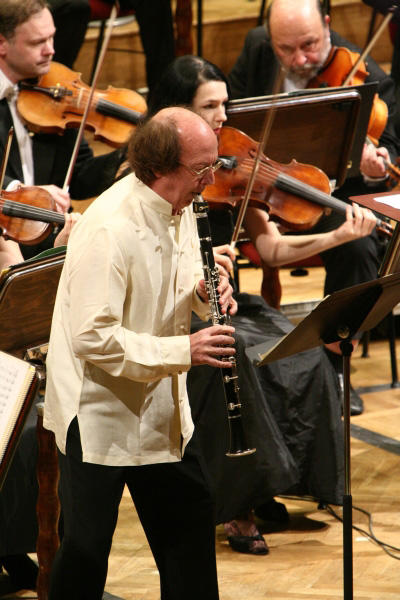
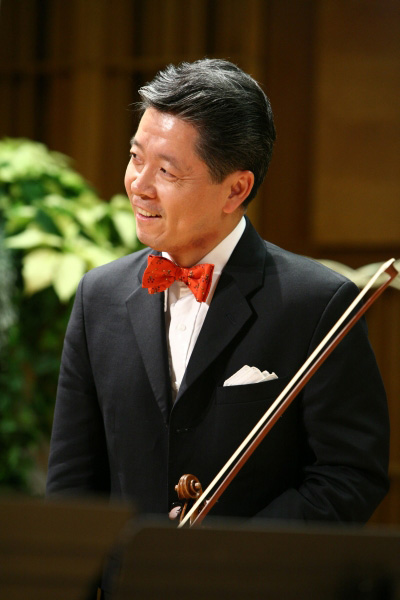
A bit earlier, Just before the evening concert, there was another unforgettable festival meeting which took place. On the stage of the Chamber Hall of Warsaw Philharmonic appeared the phenomenal Shanghai Quartet, as well as Grigori Zhyslin (viola), Michel Lethiec (clarinet), Arto Noras (cello) and Barry Douglas (piano). Quartet for Clarinet and String Trio, Cadenza per viola sola and dedicated to Krzysztof Penderecki by the Finnish composer Aulis Sallinen Baumgesang mit Epilog sounded wonderfully. Greatest emotions however, where stirred by the performance of Shanghai Quartet, which, like five years ago, when together with Krzysztof Penderecki and the Warsaw audience they celebrated the composer’s 75th birthday, reached for his String Quartets. This time, however, they performed all three in order.
Krzysztof Penderecki wrote String Quartets No. 1 and 2 during the turbulent period of the 60’s. These are works in which still strongly present are elements of musical avant-garde. String Quartet No. 3 “Leaves from an Unwritten Diary” was created half a century later. Penderecki wrote the last notes of this piece in 2008, exactly a couple of days before his previous jubilee festival. The performance of this work by the Shanghai Quartet was then breathtaking. And in fact it was no different this time.
Both in Quartet No. 1, No. 2 and No. 3 the artists reached the peak of musical reverence and perfection. They enchanted with diabolically energetic play, at the same time (especially in the “Leaves from an Unwritten Diary”) charming poetry of sound. And so, The Krzysztof Penderecki Festival once again proved to us and reminded that the performances of Shanghai Quartet are meetings with an unrivalled, absolute master of world chamber music.
Tomasz Handzlik
The evening began with a very strong accent: Flute Concerto with the solo part performed by brilliant Łukasz Długosz, led by the Spanish conductor Jesús López-Cobos, and one of Krzysztof Penderecki’s flagship compositions De Natura Sonoris III, the first versions of which Stanley Kubrick used years ago in his unforgettable horror movie “The Shining”. Personally, I enjoyed the most the performance of De Natura Sonoris. The Venezuelan conductor Rafael Payare, leading this evening the youngest Polish symphonic ensemble – The Polish Sinfonia Iuventus Orchestra – was like dynamite. The young ensemble instantly let itself get carried away by his emotional vision, painting before our eyes musical images full of terror, sending shivers down the spine with the magnitude of sound and expression intensified to the limits.
After these emotions, came a moment of relief. And probably in the most beautiful form. From the stage of Warsaw Philharmonic came the sounds of Penderecki’s Largo for Cello and Orchestra. Behind the conductor’s stand appeared Maximiano Valdés, while the solo part was personated by Claudio Bohórquez. Already the first sounds of the cello solo, and right after that the soloist playing in a duo with the cello concertmaster, gave a clear signal that we would be dealing with a musical absolute. Because Claudio Bohórquez is a great artist! His every sound, every phrase is a real piece of art. Also the orchestra led by Valdés sounded wonderfully, with sensitivity, either holding a dialogue or building a strong counterpoint to the poetic parts of the soloist.
The evening ended with the performance of Symphony No. 8 “Lieder der Vergänglichkeit” (Songs of Transience). “Transience is a theme of the mature age, when a man does an examination of conscience, summing up what happened in his life (…) At the beginning I wanted to write a cycle of songs about trees. It turned out however, that something more than only music about trees is being born. That in this period of life the main theme for me is in fact transience. I think that at a certain age a man begins to have distance to everything: to things, to people, to literature and to music. I surely would not have written such a piece when I was 30 or 40,” Penderecki once admitted in an interview for “Rzeczpospolita”. Performing this work on Wednesday evening The Polish Sinfonia Iuventus Orchestra and Krakow Philharmonic Choir delighted with delicate lyric and subtlety of interpretation. Also the soloists made a great impression: Iwona Hossa – soprano, Agnieszka Rehlis – mezzo-soprano, Mariusz Godlewski – baritone. Under the baton of Łukasz Borowicz, Symphony “Songs of Transience” became an extraordinary, personal tale about life, and, maybe also about the dreams of the artist?
A bit earlier, Just before the evening concert, there was another unforgettable festival meeting which took place. On the stage of the Chamber Hall of Warsaw Philharmonic appeared the phenomenal Shanghai Quartet, as well as Grigori Zhyslin (viola), Michel Lethiec (clarinet), Arto Noras (cello) and Barry Douglas (piano). Quartet for Clarinet and String Trio, Cadenza per viola sola and dedicated to Krzysztof Penderecki by the Finnish composer Aulis Sallinen Baumgesang mit Epilog sounded wonderfully. Greatest emotions however, where stirred by the performance of Shanghai Quartet, which, like five years ago, when together with Krzysztof Penderecki and the Warsaw audience they celebrated the composer’s 75th birthday, reached for his String Quartets. This time, however, they performed all three in order.
Krzysztof Penderecki wrote String Quartets No. 1 and 2 during the turbulent period of the 60’s. These are works in which still strongly present are elements of musical avant-garde. String Quartet No. 3 “Leaves from an Unwritten Diary” was created half a century later. Penderecki wrote the last notes of this piece in 2008, exactly a couple of days before his previous jubilee festival. The performance of this work by the Shanghai Quartet was then breathtaking. And in fact it was no different this time.
Both in Quartet No. 1, No. 2 and No. 3 the artists reached the peak of musical reverence and perfection. They enchanted with diabolically energetic play, at the same time (especially in the “Leaves from an Unwritten Diary”) charming poetry of sound. And so, The Krzysztof Penderecki Festival once again proved to us and reminded that the performances of Shanghai Quartet are meetings with an unrivalled, absolute master of world chamber music.
Tomasz Handzlik