
The power of the old and the new - 19 November 2013
Krzysztof Penderecki’s Dimensions of Time and Silence, Double Concerto for Violin, Viola and Orchestra, Three Chinese Songs for Baritone and Chamber Orchestra and Symphony No. 2 “Christmas” – behind us is another day of The Krzysztof Penderecki Festival marking the composer’s 80th birthday.
1959 was a breakthrough year for Krzysztof Penderecki. In that year he won three main prizes (1st, 2nd and 3rd) at the competition for young composers held by the Polish Composers' Association, for his Strophes, Emanations and Psalms of David. At the end of 1959 and beginning of 1960 Penderecki created also Dimensions of Time and Silence which confirmed him as a member of the world of musical avant-garde. It is a work, in which Penderecki breaks certain established standards and customs. In order to achieve new sound effects he makes the musicians hit their instruments, run the bow over the bridge instead of the strings, and asks the choir to whistle, shout, smack their lips and whisper. This extraordinary piece, which is one of the composer’s oldest works in the program of this festival, was superbly performed at last night’s concert by the artists of Warsaw Philharmonic Symphony Orchestra and Choir under the baton of Jerzy Maksymiuk.
After the experiences with avant-garde Penderecki at one point turned away from this current, because – as he explained, “in innovation, which is brought down to experiments and formal speculation, there is more destruction than creating something new.” Today, when young musicians more and more often reach for the compositions from that very period and even the public of rock festivals admires it, the composer wonders aloud, “Or maybe it was not so bad after all?” Yesterday’s performance of Dimensions of Time and Silence proves that these are works, which still carry great power and potential – as much for the performers as for the audience.
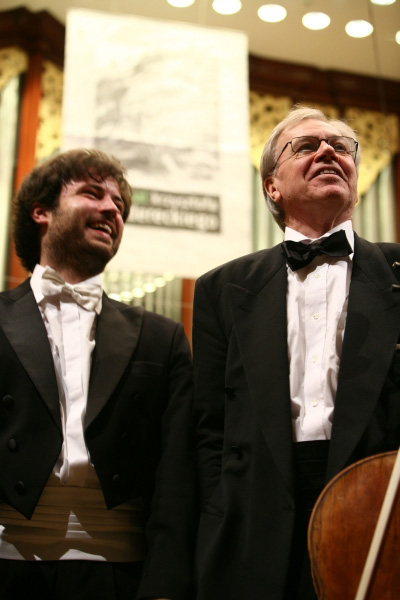
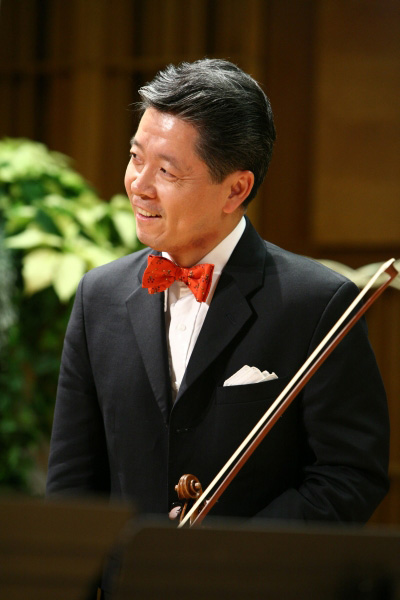
Just as great in their sound, powerful effect and expression are the newest works by Penderecki. In this year’s program they were splendidly juxtaposed with those older, even by 50 years. One of the newest works is the Double Concerto for Violin, Viola and Orchestra composed in 2012 for the jubilee, 200th anniversary of the Viennese Music Association Musikverein. Penderecki dedicated this work to the Lithuanian violinist and violist Julian Rachlin, who, together with the Japanese violinist Fumiaki Miura, was the first to perform this work. During yesterday’s evening it was the same two artist who performed this work again. We could admire Rachlin already twice during this jubilee festival. This time though, he did not play violin but viola. Fumiaki Miura appeared however in the program for the first time. And from the first note he enraptured with an incredibly melodious as well as dynamic and perfectly clear sound.
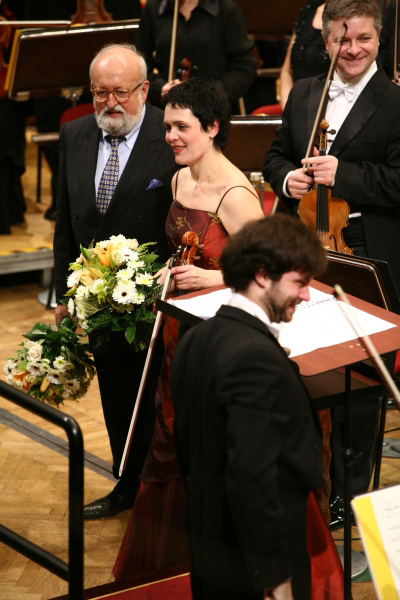
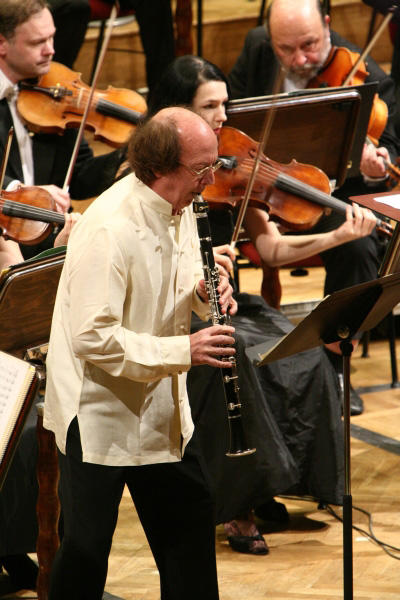
Penderecki wrote Double Concerto… implementing a conception, according to which the solo parts can remind freely shaped and requiring incredible creative invention cadences. Rachlin and Miura coped with this task in a masterly fashion. But just important and expressive is the role of the orchestra, which not only counterpoints the solo parts of violin and viola, but also enters into a discourse with them, slightly accosts and stimulates, in order to unite with them in the finale into one whole. Led by the young Venezuelan conductor Rafael Payare the orchestra perfectly read the composer’s intentions. Also individual groups of instruments sounded excellent (beautiful oboe solo). Thus, it is not surprising that not only the soloists but also the Philharmonic ensemble was awarded with a thunderous applause by the audience.
Just as enthusiastically received was the performance of Three Chinese Songs for Baritone and Chamber Orchestra, with Thomas Bauer performing the solo part and, as conductor, one of the most highly valued Chinese masters, Long You. The meeting of those two celebrities of the musical world had to result in a success. And so it was! Bauer delighted with vocal mastery, a ringing voice with a beautiful timbre that sent shivers down the spine. Long Yu turned the musicians of Warsaw Philharmonic into a real perpetuum mobile.
And one more strong accent that closed this evening – a fantastic performance of Penderecki’s Symphony No. 2 “Christmas”. The orchestra of Warsaw Philharmonic was conducted by Marek Janowski, who once again showed the great power and the magnitude of sound of Penderecki’s compositions.
1959 was a breakthrough year for Krzysztof Penderecki. In that year he won three main prizes (1st, 2nd and 3rd) at the competition for young composers held by the Polish Composers' Association, for his Strophes, Emanations and Psalms of David. At the end of 1959 and beginning of 1960 Penderecki created also Dimensions of Time and Silence which confirmed him as a member of the world of musical avant-garde. It is a work, in which Penderecki breaks certain established standards and customs. In order to achieve new sound effects he makes the musicians hit their instruments, run the bow over the bridge instead of the strings, and asks the choir to whistle, shout, smack their lips and whisper. This extraordinary piece, which is one of the composer’s oldest works in the program of this festival, was superbly performed at last night’s concert by the artists of Warsaw Philharmonic Symphony Orchestra and Choir under the baton of Jerzy Maksymiuk.
After the experiences with avant-garde Penderecki at one point turned away from this current, because – as he explained, “in innovation, which is brought down to experiments and formal speculation, there is more destruction than creating something new.” Today, when young musicians more and more often reach for the compositions from that very period and even the public of rock festivals admires it, the composer wonders aloud, “Or maybe it was not so bad after all?” Yesterday’s performance of Dimensions of Time and Silence proves that these are works, which still carry great power and potential – as much for the performers as for the audience.
Just as great in their sound, powerful effect and expression are the newest works by Penderecki. In this year’s program they were splendidly juxtaposed with those older, even by 50 years. One of the newest works is the Double Concerto for Violin, Viola and Orchestra composed in 2012 for the jubilee, 200th anniversary of the Viennese Music Association Musikverein. Penderecki dedicated this work to the Lithuanian violinist and violist Julian Rachlin, who, together with the Japanese violinist Fumiaki Miura, was the first to perform this work. During yesterday’s evening it was the same two artist who performed this work again. We could admire Rachlin already twice during this jubilee festival. This time though, he did not play violin but viola. Fumiaki Miura appeared however in the program for the first time. And from the first note he enraptured with an incredibly melodious as well as dynamic and perfectly clear sound.
Penderecki wrote Double Concerto… implementing a conception, according to which the solo parts can remind freely shaped and requiring incredible creative invention cadences. Rachlin and Miura coped with this task in a masterly fashion. But just important and expressive is the role of the orchestra, which not only counterpoints the solo parts of violin and viola, but also enters into a discourse with them, slightly accosts and stimulates, in order to unite with them in the finale into one whole. Led by the young Venezuelan conductor Rafael Payare the orchestra perfectly read the composer’s intentions. Also individual groups of instruments sounded excellent (beautiful oboe solo). Thus, it is not surprising that not only the soloists but also the Philharmonic ensemble was awarded with a thunderous applause by the audience.
Just as enthusiastically received was the performance of Three Chinese Songs for Baritone and Chamber Orchestra, with Thomas Bauer performing the solo part and, as conductor, one of the most highly valued Chinese masters, Long You. The meeting of those two celebrities of the musical world had to result in a success. And so it was! Bauer delighted with vocal mastery, a ringing voice with a beautiful timbre that sent shivers down the spine. Long Yu turned the musicians of Warsaw Philharmonic into a real perpetuum mobile.
And one more strong accent that closed this evening – a fantastic performance of Penderecki’s Symphony No. 2 “Christmas”. The orchestra of Warsaw Philharmonic was conducted by Marek Janowski, who once again showed the great power and the magnitude of sound of Penderecki’s compositions.